Tag: Dental Practice Owners

Tax Planning for High Earners: Smart Tax Strategies and Deductions (Ep. 13)

Tax Planning for High Earners: Smart Tax Strategies and Deductions (Ep. 13)

Taxes don’t have to feel like a burden.

In this episode of Oral Wealth: Prosperity in Practice, host Brian Swilling shifts the conversation from tax stress to tax strategy, showing dentists how to turn obligations into opportunities. He walks through retirement savings foundations, smart entity choices, and practice-specific deductions that can lower your tax bill. Brian also highlights creative strategies like family employment, Roth savings for kids, and the Augusta Rule. Along the way, he explains why collaboration between your CPA and financial planner is key to long-term financial planning success.

Brian discusses:

  • Foundational retirement savings strategies like 401(k)s, profit sharing, and defined benefit plans
  • Choosing the right business entity and tax filing status for practice owners
  • How to maximize the Qualified Business Income Deduction (QBID) before it phases out 
  • Practice-specific deductions, depreciation, and overlooked write-offs
  • Creative tax strategies, including family employment, Roth savings for kids, tax-loss harvesting, and the Augusta Rule
  • Why collaboration between CPAs and financial planners leads to better long-term outcomes
  • And more

Resources:

Connect with Brian Swilling:

*Roth IRA earnings grow tax-free, and qualified withdrawals are also tax-free, provided certain conditions are met (e.g., the account has been open for at least 5 years and you are age 59½ or older, or meet another qualifying condition). Eligibility to contribute to a Roth IRA phases out at higher income levels. Non-qualified withdrawals of earnings may be subject to income taxes and a 10% early withdrawal penalty.

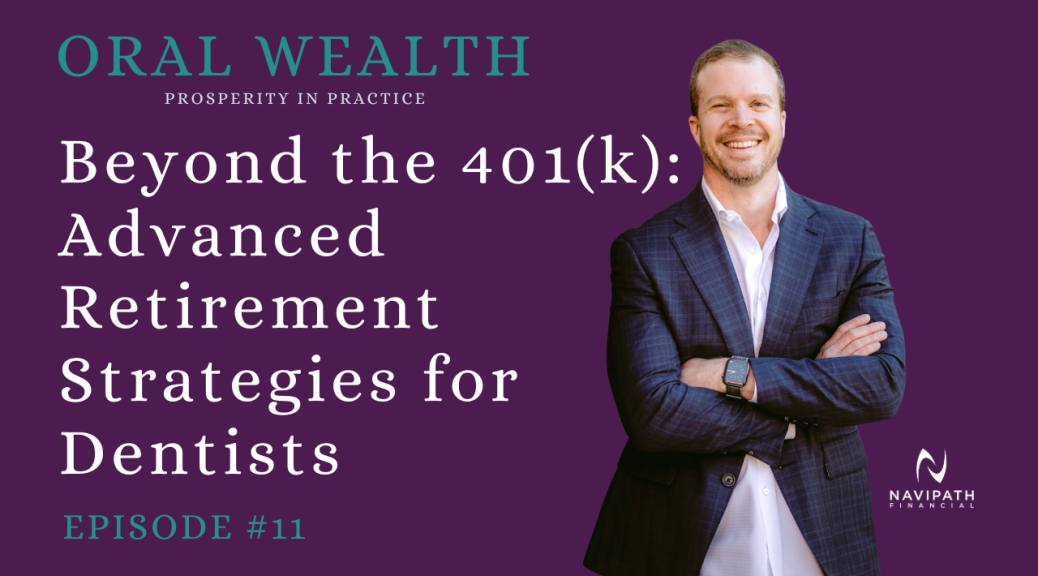
Beyond the 401(k): Advanced Retirement Strategies for Dentists (Ep. 11)

Beyond the 401(k): Advanced Retirement Strategies for Dentists (Ep. 11)

Are you a practice owner facing high taxes in your peak earning years?

In this episode of Oral Wealth: Prosperity in Practice, Brian Swilling breaks down advanced retirement strategies that can help dentists and healthcare professionals reduce taxable income while accelerating long-term savings. He explains how defined benefit plans (cash balance pension plans) can be layered with 401(k)s and profit-sharing to maximize contributions, reduce taxable income, and accelerate retirement savings. Brian also shares real-world examples of practice owners saving six figures in taxes and outlines why these strategies work best for high-income earners with younger staff.

Brian discusses:

  • What a defined benefit plan (cash balance pension plan) is and how it works
  • How 401(k), profit-sharing, and defined benefit plans can layer together
  • Why these strategies are best suited for high-income practice owners with younger staff
  • Real-world examples of dentists using cash balance plans to save six figures in taxes
  • The importance of working with a CPA and financial planner to determine if this approach is right for you
  • And more

Connect with Brian Swilling:

*Roth IRA earnings grow tax-free, and qualified withdrawals are also tax-free, provided certain conditions are met (e.g., the account has been open for at least 5 years and you are age 59½ or older, or meet another qualifying condition). Eligibility to contribute to a Roth IRA phases out at higher income levels. Non-qualified withdrawals of earnings may be subject to income taxes and a 10% early withdrawal penalty.